
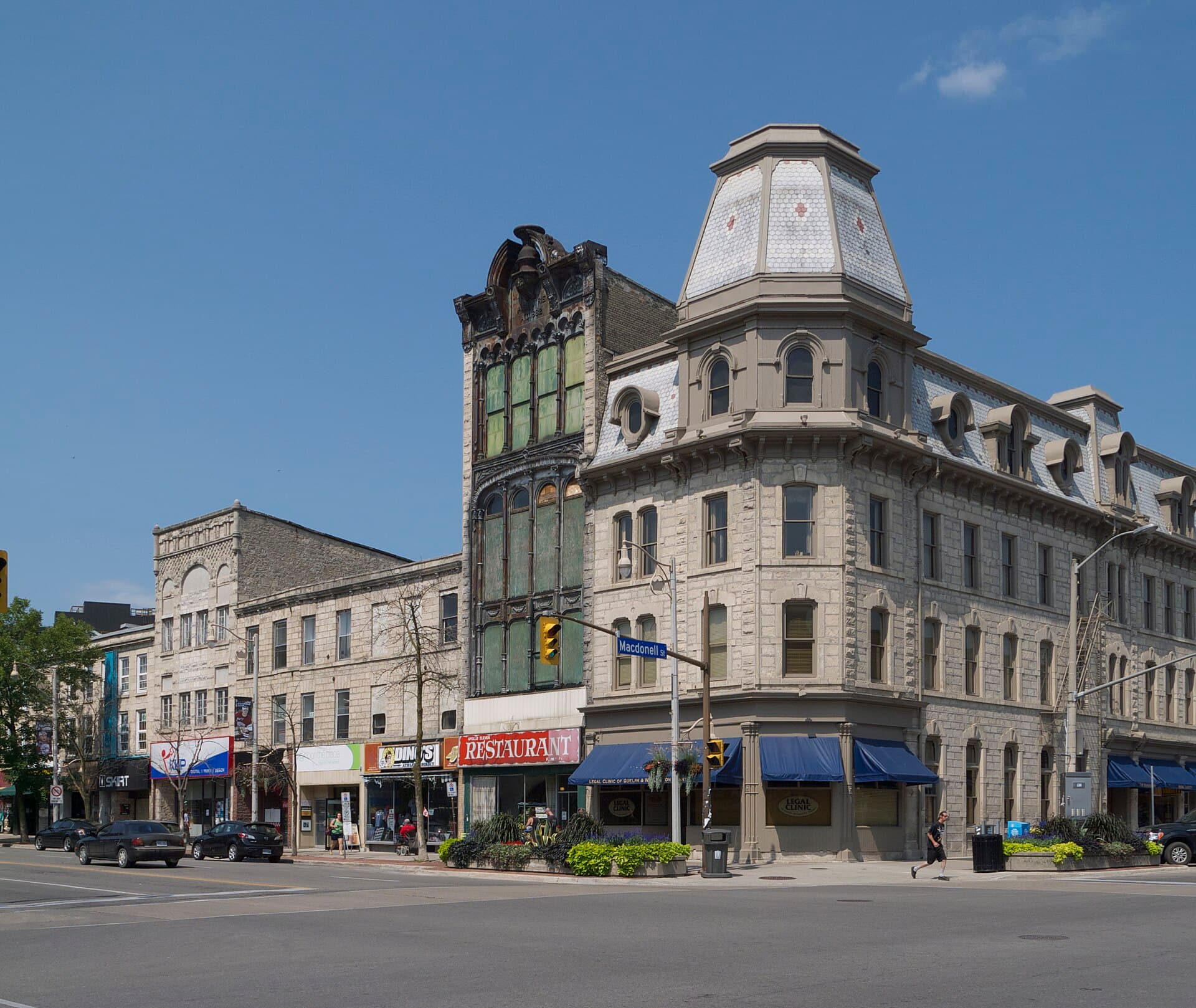
Welcome to the Royal City.
Guelph doesn’t look like other cities, and that’s the first thing people fall for — limestone streets that fan out from the river the way its founder drew them in 1827, a basilica on the hill, and two rivers stitching the whole place together with green. Whether you know Guelph well or you’re just beginning to picture a life here, we’d love to help you find the corner of it that feels like yours.
A little piece of Europe, an hour from Toronto.
A town drawn by hand
When the novelist John Galt founded Guelph in 1827, he sketched something no surveyor's grid would ever allow — streets radiating out from the Speed River like the spokes of a fan. Nearly two centuries later that plan still shapes the city's heart, and it is why downtown Guelph feels less like southern Ontario and more like a small European city.
Built of limestone
The early city was raised from stone quarried right here, and the warm grey limestone still sets Guelph's tone — banks, churches, storefronts and homes that glow honey-coloured in the late afternoon. These are streets that were built to last, and to be looked at.
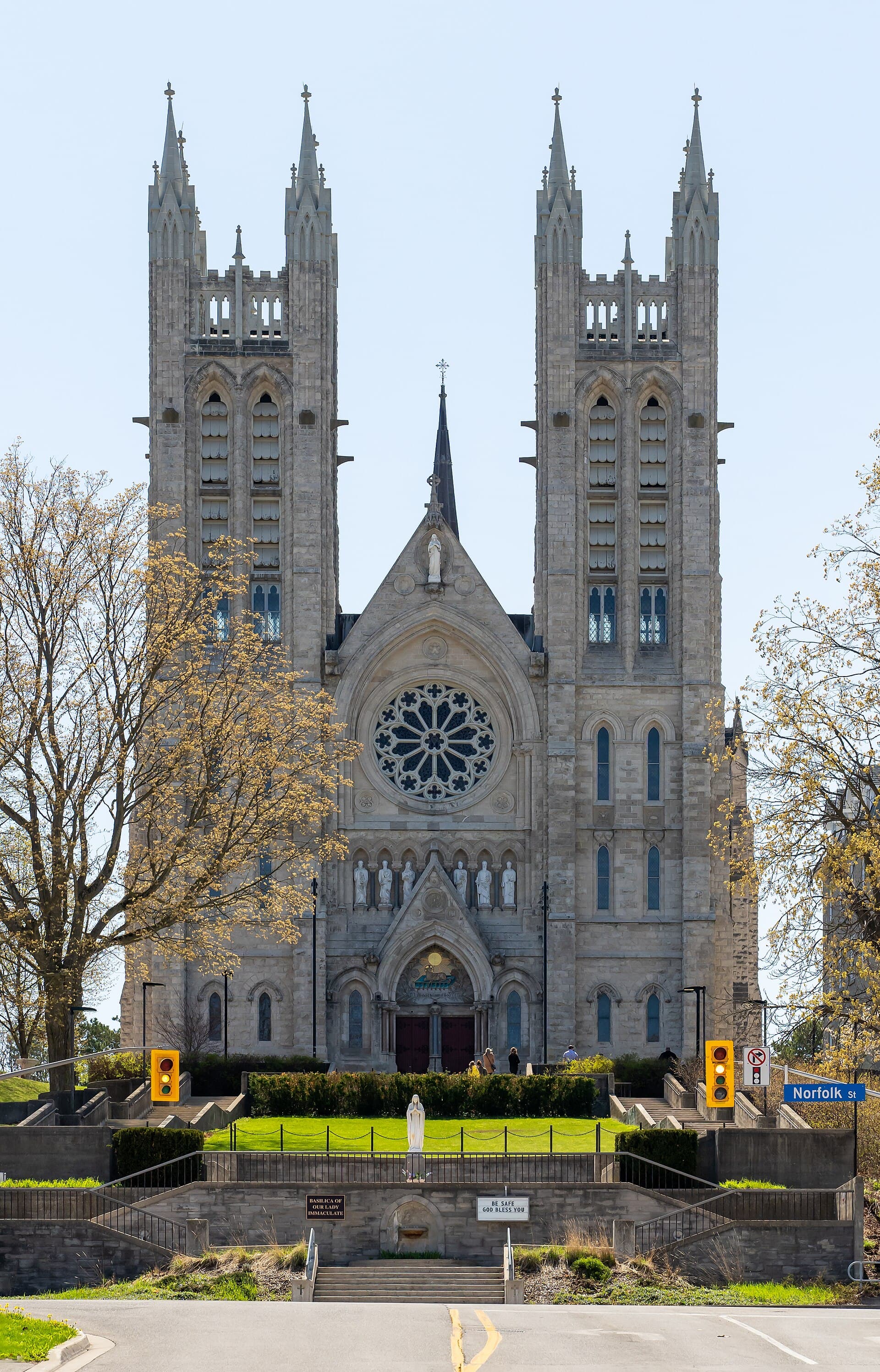
The church on the hill
At the top of the radial plan, exactly where Galt intended the town's centrepiece to stand, the Basilica of Our Lady Immaculate lifts its twin towers over downtown — a Gothic Revival landmark that took decades of local devotion to complete, and the first thing many people ever notice about Guelph. It has a way of making the whole city feel composed around it.
The Royal City
Galt named his new town for the ancestral family of the British crown, and Guelph has carried “The Royal City” ever since — not grandly, just proudly, the way you keep a good family name. It suits a place this handsome.
Two rivers, and green in every direction.
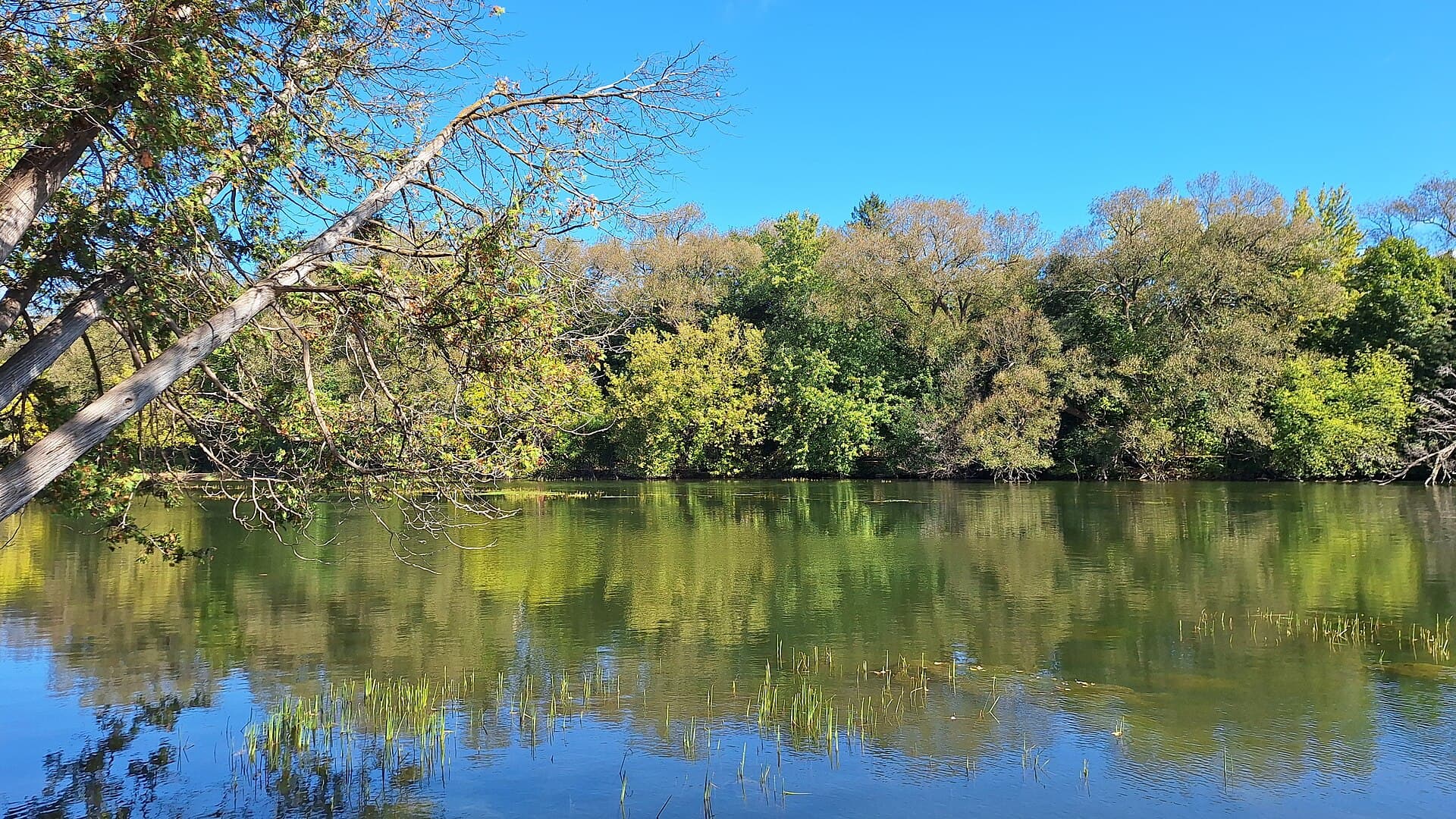
Where two rivers meet
The Speed and the Eramosa wind through the city and join in the middle of it, which means riverbank is never far from any front door — morning mist on the water downtown, quiet paddling stretches, and green corridors that thread between whole neighbourhoods.
Green on purpose
Guelph treats sustainability as a civic habit, not a slogan — the city is recognized as a Canadian leader in water conservation and ecological planning, and it shows in everything from the trail network to how new neighbourhoods are laid out. If living lightly matters to you, you will be in good company here.
Trails in every direction
River trails, rail trails, conservation-area loops — Guelph's walking and cycling network reaches nearly every corner of the city, and the after-dinner walk here has a way of turning into an hour. Nobody seems to mind.
The Arboretum
On the university's lands, the Arboretum keeps gardens, old-growth woods and quiet trails open to everyone — a living collection that makes a Sunday walk feel like a small botanical holiday, right inside the city.
Twenty-three neighbourhoods, five corners of one city.
From century limestone within the sound of the Basilica’s bells to leafy mid-century streets north of the river, to bright new crescents in the south end where the next generation of Guelph families is settling in — every stage of life has a neighbourhood here, and the rivers and trails knit them all together.
Select a neighbourhood to jump to it
Central Guelph
South Guelph
East Guelph
West Guelph
North Guelph
Thumbnail sketches only — every one of these deserves its own conversation. Ask us about any of them.
A city that works, learns and gathers.
The university
The University of Guelph gives the city its youthful hum and its worldwide name in agriculture and food science — and its Ontario Veterinary College has been training veterinarians longer than any school in Canada. The campus greens, the lectures open to the public, the energy on a September weekend: the university is woven right into city life.
An economy that spreads its bets
Advanced manufacturing anchored by Linamar, a deep agri-food and biotech sector, and a growing green-technology scene — Guelph's economy stands on several sturdy legs at once, and the steady work shows in how settled its neighbourhoods feel.
A downtown that shows up
Market mornings at the farmers' market, a show at the River Run Centre on the river's edge, dinner on a patio under limestone facades, and a craft-beer scene with deep roots — this is the historic home of Sleeman — Guelph's downtown has been the town's living room since 1827, and it still acts like it.
In Flanders Fields
John McCrae — the soldier-physician whose poem gave the world its most enduring words of remembrance — was born here in 1872, and his limestone birthplace by the Speed is kept as a museum. Guelph remembers gently, the way it does most things.
Thinking about calling Guelph home?
We help families find their place here every week — video tours, neighbourhood shortlists, and remote-friendly closings, with your questions coming straight to Dave.
Neighbourhood map derived from OpenStreetMap data © OpenStreetMap contributors, available under the Open Database License. Photography: Andre Carrotflower (CC BY-SA 4.0) · Maksim Sokolov (maxergon.com) (CC BY-SA 4.0) · JustSomePics (CC BY-SA 4.0) · Terry.grignon (CC0)


